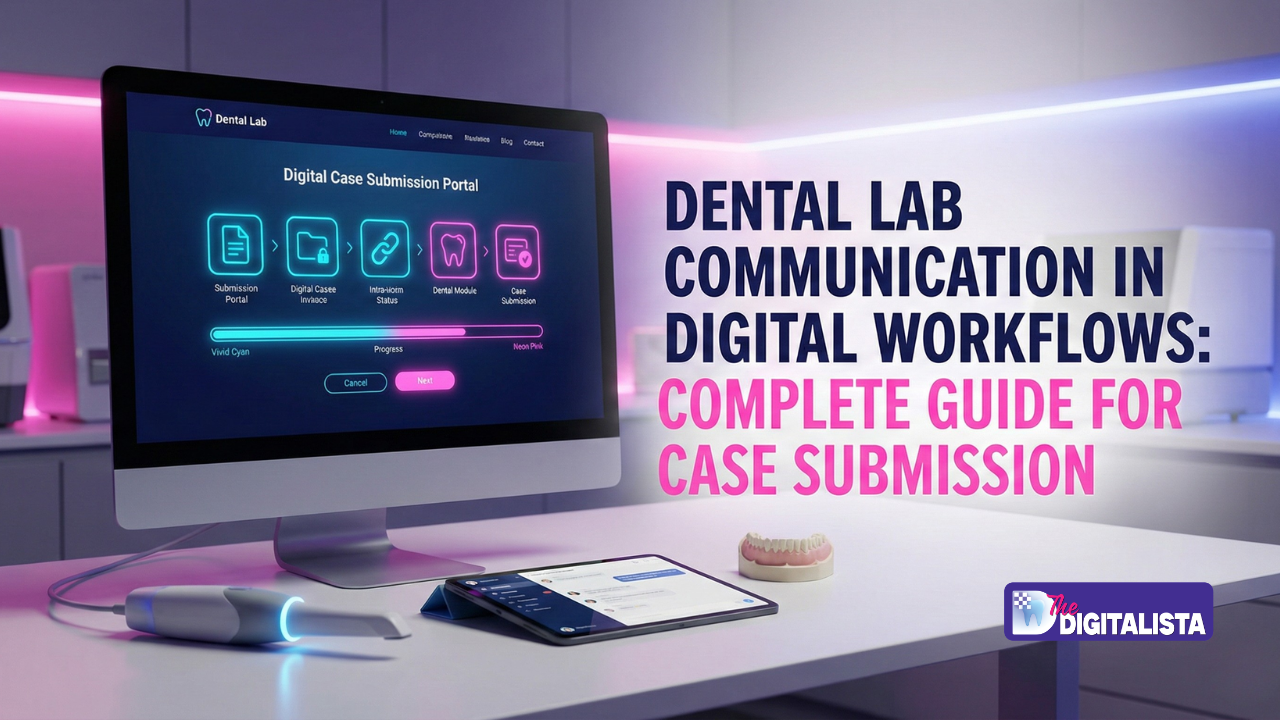
Your remake rate is a communication problem, not a technology problem. This guide reveals the proven 6-step workflow and pre-submission checklist that top practices use to cut digital remakes by over 50% and build unbreakable lab partnerships.
Introduction: The $33,000 Communication Problem
Every day, dental practices send thousands of cases to laboratories. Yet studies show that 73% of dental laboratories report remake rates exceeding 15% on digital cases—a stark contrast to the 8-12% rate for traditional impressions. The culprit isn’t the scanner; it’s the communication.
When a practice submits a case with incomplete information, poor-quality scans, or unclear clinical specifications, a cascade of costly failures begins. The lab must either halt production to request clarification, proceed with assumptions and risk a remake, or ship a restoration that simply doesn’t fit. For a mid-sized lab, a 15% remake rate translates to over $33,000 in annual losses. For the practice, it means wasted chair time, frustrated patients, and eroded trust.

This guide provides a comprehensive framework to transform your case submission process from a source of frustration into a competitive advantage. You will learn the specific protocols, software solutions, and team training strategies that elite practices are using to master lab communication and achieve predictable, profitable outcomes.
The Core of the Problem: Why Digital Demands a New Language
Traditional workflows were forgiving. A physical impression provided tangible context that compensated for vague written instructions. A lab technician could inspect the model, measure margins with precision tools, and make reasonable assumptions. Digital workflows eliminate that safety net. When a practice uploads an STL file, the lab receives only what the scan captured—nothing more.
“Communication is the key to success in dentistry and laboratory relations. Without it, even the best scanner data becomes unusable.” — The Digitalista

Research published in 2024 confirms this, finding that structured information technology systems (ITS) reduced case completion time by 20% and decreased the need for re-communication by 40% compared to traditional methods. The difference wasn’t the scanner; it was the system.
The Five Critical Failure Points in Digital Submissions
Our analysis of thousands of digital cases reveals five common areas where communication breaks down, leading to the vast majority of remakes.

Data Security Failures:: Transmitting sensitive patient data via unencrypted, non-compliant channels.
Incomplete Laboratory Prescriptions:: Failing to specify restoration type, material, deadlines, or aesthetic requirements.
Poor-Quality Scans:: Submitting scans with obscured margins, motion artifacts, or incomplete data.
Missing Opposing/Bite Data:: Neglecting to scan the opposing arch or capture an accurate bite relationship.
Vague Aesthetic Specifications:: Providing only a shade code without details on contour, characterization, or translucency.
The Solution: The Perfect Digital Case Submission Workflow
To eliminate these failure points, top-performing practices adopt a disciplined, six-step workflow that ensures clarity, quality, and security from start to finish.

This six-step process creates a system of checks and balances that prevents errors before they happen, ensuring every case arrives at the lab complete and ready for production.

A clear, complete submission empowers the lab technician to focus on high-value design work rather than administrative follow-up.
Your Most Powerful Tool: The Pre-Submission Checklist
Before any case leaves your practice, it must pass a final quality control check. This checklist, implemented as a standard operating procedure, is the single most effective tool for preventing common submission errors.

Integrate this checklist into your practice management software and make it a mandatory step for every digital case submission.
Case Study: The 6-Week Transformation
Mountain View Dental Associates, a 4-dentist practice, saw their remake rate climb from 8% to 19% after adopting digital scanners. By implementing a 6-week program focused on training, documentation, and technology, they achieved a dramatic turnaround.

The results demonstrate the profound impact of a systematic approach to communication. The practice not only reduced costs but also improved patient satisfaction and staff efficiency.

Your Next Step: Master the System
Miscommunication is the primary source of digital remake failures, yet it is entirely preventable. The practices thriving in the digital era are not those with the most expensive scanners, but those with the most disciplined communication systems.
Start today by implementing the Pre-Submission Checklist for every case. Train your team on the 6-Step Workflow. Formalize your lab partnerships with clear agreements. By mastering the system, you can finally unlock the full promise of digital dentistry: predictability, profitability, and clinical excellence.